Music
Curriculum Intent
Music allows children to take risks and express themselves creatively, experimenting with sound and movement encompassing various genres. Music allows children to draw on subject knowledge and disciplines throughout all areas of the curriculum including literacy, maths, PE, science, history and art. Music provides opportunities for children to have a wide range of experiences to explore and learn both indoors and outdoors. The purpose of the music curriculum is for children to develop a passion for music and inspire them to express their talents.
Ambitions: Unique to Music:
Music is a universal language that embodies one of the highest forms of creativity. It develops self-confidence, courage and a sense of achievement. Music helps to develop listening skills, concentration, the ability and confidence to sing, to create and compose music on their own and with others. It gives children the opportunity to learn to use a musical instrument and to use technology appropriately. Music enables children to support each other through self-evaluation and peer evaluation. Music inspires children to perform to their peers and wider audiences, drawing on their knowledge of great composers and musicians. Music enables children to be independent learners.
From The National Curriculum in England – framework document 2013 Purpose of study
“Music is a universal language that embodies one of the highest forms of creativity. A high-quality music education should engage and inspire pupils to develop a love of music and their talent as musicians, and so increase their self-confidence, creativity and sense of achievement. As pupils progress, they should develop a critical engagement with music, allowing them to compose, and to listen with discrimination to the best in the musical canon.”
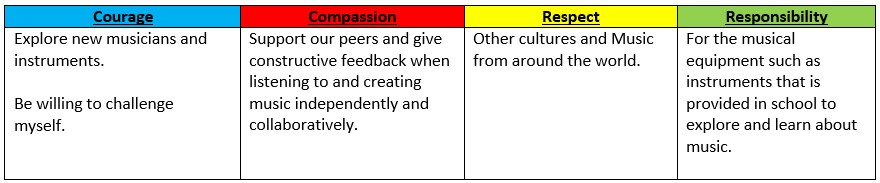
How do we show the Core Values in Music
At Blackwell we follow a scheme called Kapow to support our teaching of music.
Click on the links below to be able to access the following information;
1. Music year group overview Year 1-6. This will show you what knowledge and skills are taught when across the year; and from year group to year group (condensed).
2. Progressive vocabulary list. This will show you what key vocabulary is taught when, this is not an exhaustive list.
3. Links that can be made to the Early Learning Goals for Music.
4. Examples of Knowledge Organisers used in each Year group.